

Communications & Media Courses


- CIP
- AIA CES
- AICP CM

- AIA CES
- AICP CM
- SACPLAN CPD




- CIP
- AIA CES
- AICP CM




- CIP
- AIA CES
- AICP CM


- CIP
- AIA CES
- AICP CM




- CIP
- AIA CES
- AICP CM


Top Communications & Media Instructors




















Master Urban Planning Skills With A Planetizen Courses Subscription.
Sign up
High quality video lessons developed by experts.

Complete course work to receive a certificate from Planetizen.

Test your comprehension with course quizzes.

Access reading lists, articles, and other materials prepared by instructors.
All Communications & Media Courses
Crime and Urban Planning in the United States
The spatial patterns and environmental characteristics of urban crime offer planners an opportunity to contribute to building crime-resilient communities.


Just Suburbs: The New Frontier for Equity and Inclusion
Poverty is being displaced from central cities to suburbs. As a response, planners should look to strategies that create mixed-income neighborhoods—a place that everyone can call home.
Suburban Remix: Creating the Next Generation of Urban Places
The economic, demographic, and technological forces reshaping suburbs are under-reported and misunderstood. Learn how suburbs can manage change while enhancing livability, economic opportunity, and fiscal responsibility.
How Zoning Shapes Cities, Communities, and Regions
A better understanding of the basic components of zoning, history and evolution of zoning codes, economic and political goals of plan implementation, and impacts on housing prices and production can inform improved planning outcomes.
Equitable Transit Oriented Development
Equitable transit oriented development (eTOD) prioritizes inclusive community development in multi-modal regional growth.
Methods for Neighborhood Scale Revitalization
This course presents a rigorous but adaptable methodology that builds on the strengths of neighborhoods to develop customized approaches for addressing challenges that directly respond to the needs and vision of each neighborhood.
Women and Cities 5: The Feminist Future City
This final chapter speculates on what a feminist city could look like, recalling case studies and ancient examples that include contemporary contexts but also consider future needs for a more heart-centered city designed for everyone.
Women and Cities 4: Gender Equity in the Public Sphere
This course will outline the way in which women have occupied public spaces and the transition into a greater level of visibility for women in cities.
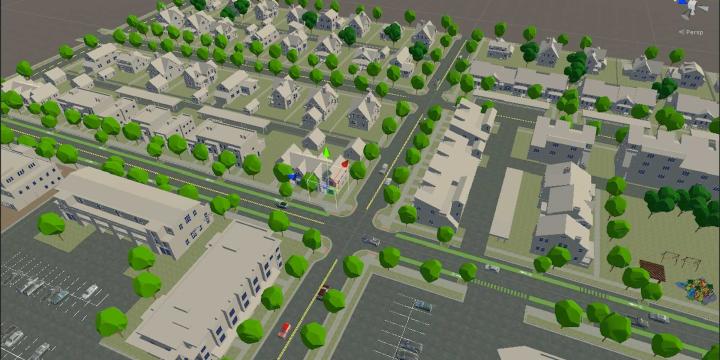
The Elements of Citymaking: Design, Policy, and Finance
Examine the theory of city-making at various scales, ranging from a development site at the smallest scale to the largest urban regions.
Accessory Dwelling Units: Understanding America’s Newest Housing Typology
Explore the latest ADU policy developments from leading American cities, key challenges and opportunities for increasing or limiting ADU production, first-hand examples, and best practices in ADU affordability programs.
Solving Coverage and Location-Allocation Problems
Location-allocation problems involve locating supply sites and simultaneously allocating demand to those sites so the entire system is optimized. With this course, you will learn the basic principles of the coverage and location-allocation problems and be able to solve them using LINGO software and map the results in QGIS.
Location Optimization
This course introduces the basic principles of location optimization models and provides a hands-on tutorial on point-based location optimization using QGIS and LINGO.
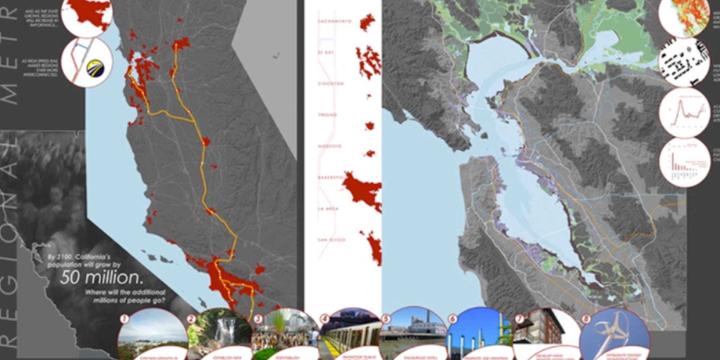
Designing the Megaregion
Current megaregion development is destabilizing the natural environment, causing gridlock on highways and congestion at airports, and making cities and suburbs separate and unequal. This course discusses how we can change these trends and invest in megaregions to improve planning and development outcomes developing and older areas.
The YIMBY Movement: Opportunities and Challenges for Planners
Yes In My Back Yard, most commonly referred to as YIMBY, is a grassroots social movement advocating for an increase in housing development at the regional, city, and neighborhood levels. This course examines YIMBY organizational structures and the roots, goals, setbacks, successes, and tactics of the movement.
Introduction to Urban Informatics
This course discusses how the field of urban informatics works. You will also learn about the technologies and concepts influencing Urban Informatics, including "Big Data," machine learning, visualization, and data-driven decision making.
Introduction to Smart Cities
This course explores the characteristics and the challenges of smart cities, as well as the potential opportunities for a smart cities approach within the urban design and urban planning fields. This course also discusses the drivers and the essential technologies in a smart city.
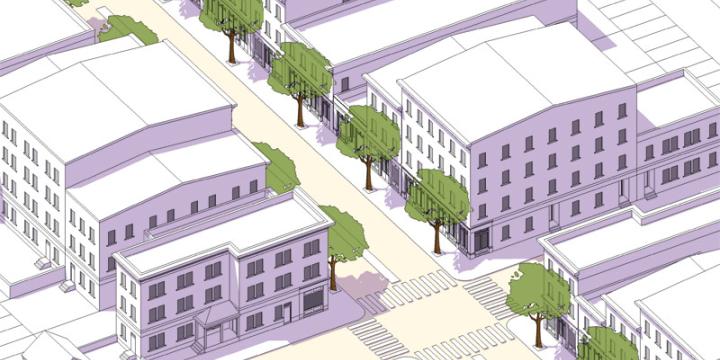
Form-Based Codes: Using Building Types, Part 2
By the end of this course, you will have a high understanding of the range of building type choices, their importance, and where and how to apply them to achieve compatible and more predictable community character objectives.
Form-Based Codes: Using Building Types, Part 1
Learn about building types in the context of form-based coding and how building types can be a direct way to achieve compatible and more predictable built results.
Tableau for Planners 3: Dashboards
This course will expand on the Tableau for Planners: Introduction and Worksheets. Students will have prior experience will building basic tables and will start to use Tableau to build multi-worksheet dashboards with interactive controls like filtering. Students will also learn how to make the data used in their visualization accessible to the public. At the end of the course, we will demonstrate how to publish the work to Tableau Public and embed dashboards on websites and in social media.
Tableau for Planners 2: Worksheets
This course will expand on the Tableau for Planners: Introduction course. This course continues to train the planner on how to build effective worksheets for planners. This course will introduce general principles of data visualization and orient the user with the Tableau platform, with a primary focus on Tableau Public, a free version of Tableau's desktop software.