

Communications & Media Courses


- CIP
- AIA CES
- AICP CM

- AIA CES
- AICP CM
- SACPLAN CPD



- CIP
- AIA CES
- AICP CM




- CIP
- AIA CES
- AICP CM


- CIP
- AIA CES
- AICP CM



- CIP
- AIA CES
- AICP CM


Top Communications & Media Instructors













Master Urban Planning Skills With A Planetizen Courses Subscription.
Sign up
High quality video lessons developed by experts.

Complete course work to receive a certificate from Planetizen.

Test your comprehension with course quizzes.

Access reading lists, articles, and other materials prepared by instructors.
All Communications & Media Courses
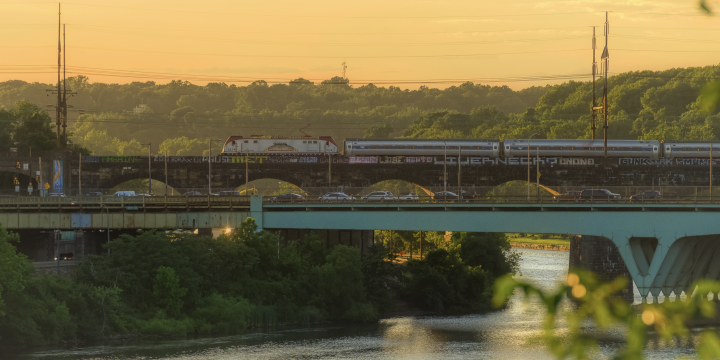
Equitable Transit Oriented Development
Equitable transit oriented development (eTOD) prioritizes inclusive community development in multi-modal regional growth.


Introduction to Transit Oriented Development
Few terms are as common in the discussion of city and regional planning in the 21st century as transit oriented development (TOD)—the planning and designing of high-demand land uses at or near highly efficient modes of transportation.
Women and Cities 5: The Feminist Future City
This final chapter speculates on what a feminist city could look like, recalling case studies and ancient examples that include contemporary contexts but also consider future needs for a more heart-centered city designed for everyone.
Women and Cities 4: Gender Equity in the Public Sphere
This course will outline the way in which women have occupied public spaces and the transition into a greater level of visibility for women in cities.
The Pedestrian Safety Crisis in the U.S.
This course discusses the social trends putting people at risk on U.S. streets and roads; why traffic safety is fundamentally a problem of systematic, structural inequality; and what U.S. planners and the public can do about it.
Planning for Universal Design
At the end of this course, you will be familiar with the tenets of Universal Design and how it differs from Americans with Disabilities Act (ADA) compliance. You'll also be able to identify tools for implementing Universal Design in planning regulations.
Right of Way: How Racial and Class Disparities Created a Silent Epidemic of Pedestrian Deaths
This course presents a panel discussion hosted by the Security and Sustainability Forum and Island Press in September 2020.
Parking Benefit Districts
Parking Benefit Districts may be the simplest, cheapest, and fastest way to improve cities, stop subsidizing congestion, protect the environment, and promote economic and social justice by managing curb parking as valuable real estate.
U.S. City Planning 101
This course is for viewers without a background or education in city planning who would like to know more about the profession, such as community members, stakeholders in planning processes, staff in planning offices, and other planning-adjacent individuals.
Sustainability Marketing and Greenwashing
Sustainability marketing, when done right, can boost a brand’s reputation and provide an edge over competitors. This course analyzes strategies to effectively jump-start sustainability marketing efforts and avoid greenwashing.
Principles of Materiality, Responsiveness, Inclusivity, and Impact
In this course, students will take a deep dive into the AA1000 AccountAbility standard and its four Principles: Inclusivity, Materiality, Responsiveness and Impact and how they integrate to develop a very well thought out framework.
Incorporating the Sustainable Development Goals into the Planning Process
This course focuses on the many ways planners can infuse sustainability into local planning activities and policies using the United Nations Sustainable Development Goals as a guiding framework.
Bringing Emotional Intelligence to Urban Planning Work
This course will help you understand what emotional intelligence is, what the component parts of emotional intelligence are, and understand some strategies to try in each of these areas.
Organizational Behavior at the Individual Level
Understanding the behavior of others can enhance the performance of your organization. This course highlights some of the individual-level behavior at the heart of work dynamics.
Getting There
Getting There was produced by planners in New Hampshire to inform other planners of the concepts and benefits of universal design. The big idea illustrated by the film is that a built environment designed with the needs of the visually impaired in mind would be universally accessible for every single member of the community.
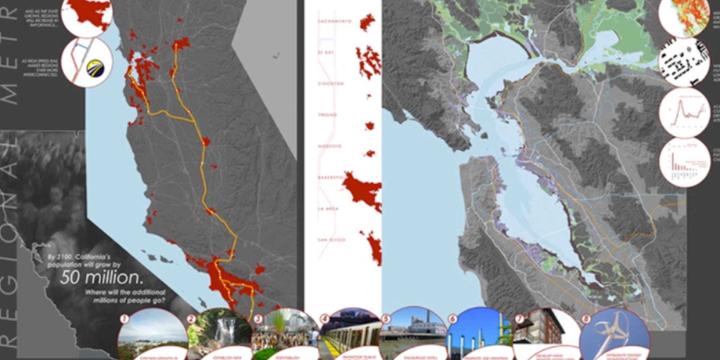
Designing the Megaregion
Current megaregion development is destabilizing the natural environment, causing gridlock on highways and congestion at airports, and making cities and suburbs separate and unequal. This course discusses how we can change these trends and invest in megaregions to improve planning and development outcomes developing and older areas.
Lewis Mumford on the City 5: The City as Man's Home
In this fifth episode of the series, Mumford begins his exploration of the city during a period of rapid transformation during the Industrial Revolution, when old cities grew quickly, new cities sprang up in the countryside, and the wealthy fled to the countryside, neglecting the health and prosperity of those who stayed behind.
Effective City Branding
City branding strategy can capture and promote the unique characteristics of cities. After understanding the all-encompassing effort it takes to plan a city rebranding, this course teaches how cities can succeed using strong place branding that attracts visitors, new citizens, new industries, and new businesses.
The Human Scale
The Human Scale juxtaposes the urban experiences of cities across the World to raise questions about the costs of modernity and to argue in favor of city planning that reclaims the public realm for social life. This new approach to planning is measured by walking distances, social interactions, and social inclusion, rather than vehicle speeds and parking spaces.
The Social Life of Small Urban Spaces
What makes good public spaces work, and why are some public spaces underused? Over the course of this film, William Whyte details insights into seven basic factors of successful public spaces: suitable space, interaction with the street, the sun, food, water, trees, and, finally, a term Whyte calls triangulation, or the ability of a public space to bring people together.