

Economics Courses
- CIP
- AIA CES
- AICP CM

- AIA CES
- AICP CM
- CNU-A
- SACPLAN CPD
- CIP
- AIA CES
- AICP CM
- SACPLAN CPD

- AIA CES
- AICP CM
- CNU-A
- SACPLAN CPD

- AIA CES
- AICP CM
- CNU-A
- SACPLAN CPD

- AIA CES
- AICP CM
- CNU-A
- SACPLAN CPD

- AICP CM
- SACPLAN CPD
- AICP CM
- CNU-A
- SACPLAN CPD
- AIA CES
- AICP CM
- CNU-A
- SACPLAN CPD


- AIA CES
- AICP CM
- CNU-A
- SACPLAN CPD
- AICP CM
- SACPLAN CPD
Top Economics Instructors















Master Urban Planning Skills With A Planetizen Courses Subscription.
Sign up
High quality video lessons developed by experts.

Complete course work to receive a certificate from Planetizen.

Test your comprehension with course quizzes.

Access reading lists, articles, and other materials prepared by instructors.
All Economics Courses
Designing the Built Environment for People With Autism Spectrum Disorder
This course covers how autistic people experience urban and natural environments and the design techniques used to improve their experience.


Design for Peace and Democracy
Explore how our designed environments can promote and support peace and democracy using historic examples of how the built environment – including parks, squares and streets – can be an instrument of oppression and serve as forums for both tyranny and uprising. We’ll return to the U.S. for stories closer to home, and frame the future in hope and optimism.
Roadways for People, Part 2
Home in on the Community Solutions Based Approach through the example of a recent project in Baltimore, Maryland to re-reroute and update an Amtrak tunnel that would affect the predominantly Black neighborhood of Reservoir Hill.
Landscape Design for Social Sustainability, Part 2
Continue exploring how designers can create built environments that foster vibrant, engaged communities through contemporary theories and case study examples around social sustainability in landscape design.
Landscape Design for Social Sustainability, Part 1
Discover how and why the built environment succeeds or fails at supporting thriving, diverse communities, and how designers can create mechanisms that allow communities to enjoy and improve their environments to suit their needs and desires.
History of U.S. Landscape Architecture, Part 2
Picking up in 1970, this course explores how the role and uses of public parks changed and how the role of the landscape architect expanded to that of advocate, facilitator, and teacher in the late 20th century and the era of climate change.
Crime Prevention Through Environmental Design
This course discusses crime as an environmental justice issue and reviews techniques that successfully reduce crime and make communities safer and healthier through Crime Prevention Through Environmental Design (CPTED) theory.
Designing a Wayfinding System
Learn how to create a comprehensive wayfinding signage system for your municipality from start to finish.
Planning a Municipal Wayfinding System
Often overlooked, wayfinding is important for urban design, accessibility, and economic development. Learn the elements of a successful wayfinding system in this course.
Walkable Density: Building Livable, Equitable, and Resilient Communities
A new approach to density is an essential need, with multiple public benefits, empowering communities to more effectively manage the accelerating pace of demographic, economic, environmental, social, and technological change.
Suburban Remix: Creating the Next Generation of Urban Places
The economic, demographic, and technological forces reshaping suburbs are under-reported and misunderstood. Learn how suburbs can manage change while enhancing livability, economic opportunity, and fiscal responsibility.
Equitable Transit Oriented Development
Equitable transit oriented development (eTOD) prioritizes inclusive community development in multi-modal regional growth.
Introduction to Transit Oriented Development
Few terms are as common in the discussion of city and regional planning in the 21st century as transit oriented development (TOD)—the planning and designing of high-demand land uses at or near highly efficient modes of transportation.
Women and Cities 5: The Feminist Future City
This final chapter speculates on what a feminist city could look like, recalling case studies and ancient examples that include contemporary contexts but also consider future needs for a more heart-centered city designed for everyone.
Women and Cities 4: Gender Equity in the Public Sphere
This course will outline the way in which women have occupied public spaces and the transition into a greater level of visibility for women in cities.
Women and Cities 3: Gender Equity in Private Life
This course explores interiors as they relate to gender equity using several case studies as examples.
The Pedestrian Safety Crisis in the U.S.
This course discusses the social trends putting people at risk on U.S. streets and roads; why traffic safety is fundamentally a problem of systematic, structural inequality; and what U.S. planners and the public can do about it.
Planning for Universal Design
At the end of this course, you will be familiar with the tenets of Universal Design and how it differs from Americans with Disabilities Act (ADA) compliance. You'll also be able to identify tools for implementing Universal Design in planning regulations.
Right of Way: How Racial and Class Disparities Created a Silent Epidemic of Pedestrian Deaths
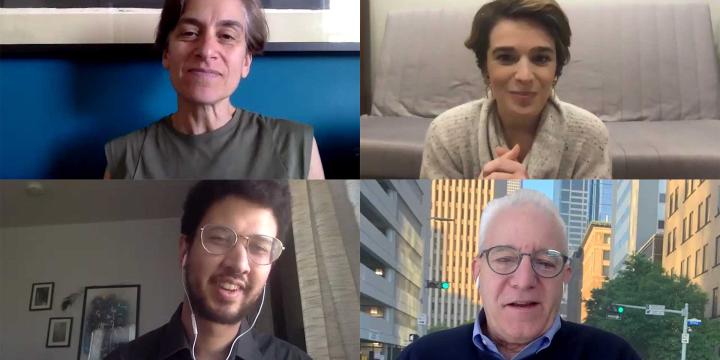
This course presents a panel discussion hosted by the Security and Sustainability Forum and Island Press in September 2020.
Parking Benefit Districts
Parking Benefit Districts may be the simplest, cheapest, and fastest way to improve cities, stop subsidizing congestion, protect the environment, and promote economic and social justice by managing curb parking as valuable real estate.