

History Courses



- AICP CM
- SACPLAN CPD


- AIA CES
- AICP CM





- AIA CES
- AICP CM




Top History Instructors

















Master Urban Planning Skills With A Planetizen Courses Subscription.
Sign up
High quality video lessons developed by experts.

Complete course work to receive a certificate from Planetizen.

Test your comprehension with course quizzes.

Access reading lists, articles, and other materials prepared by instructors.
All History Courses
Accessory Dwelling Units: Understanding America’s Newest Housing Typology
Explore the latest ADU policy developments from leading American cities, key challenges and opportunities for increasing or limiting ADU production, first-hand examples, and best practices in ADU affordability programs.


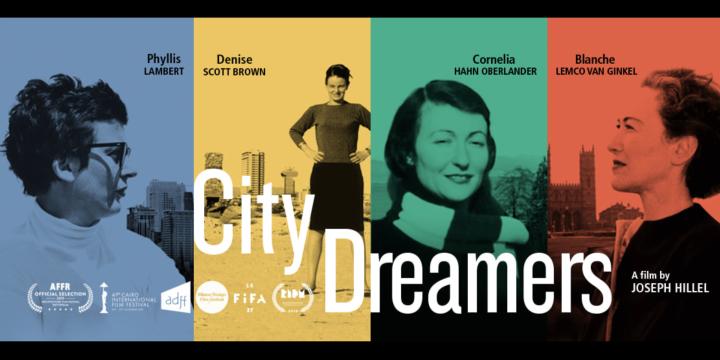
Women and Cities: Gender Equity, Past and Present
Investigate the meaning of “feminist city planning” by exploring how women have impacted cities past and present and imagining what a women-led city would look like from a variety of perspectives—both bottom-up and top-down.
A Brief History of Immigration and Planning
This course discusses the relationship among immigration, space, and planning, providing an overview of key figures, dates, and events related to immigration policies and practices in this country.
Race, Space, and Planning
This course discusses the relationship among race, space and planning, providing an overview of key dates and events relating to systemic racism in the United States.
Planning for Racial Equity
This course introduces the concept of racial equity analysis in land use planning, the motives and rationales behind such analyses, and provides guidance for conducting analysis and review.
Resilience Planning for Wildfires
This course explores the history of wildfire management, the factors that increase the threat of wildfires, and how communities can incorporate resilience thinking to plan for wildfires.
Housing and Racial Justice: Current Events Urban Resilience
This course, "Housing and Racial Justice: Current Events Urban Resilience," presents a TICCO Virtual Conference Event, hosted with support from Island Press in September 2020.
Parking Benefit Districts
Parking Benefit Districts may be the simplest, cheapest, and fastest way to improve cities, stop subsidizing congestion, protect the environment, and promote economic and social justice by managing curb parking as valuable real estate.
The High Cost Of Minimum Parking Requirements
In The High Cost of Free Parking, course instructor Donald Shoup argued that minimum parking requirements subsidize cars, increase traffic congestion, pollute the air, encourage sprawl, increase housing costs, degrade urban design, prevent walkability, damage the economy, and penalize people who cannot afford a car.
U.S. City Planning 101
This course is for viewers without a background or education in city planning who would like to know more about the profession, such as community members, stakeholders in planning processes, staff in planning offices, and other planning-adjacent individuals.
American Architectural Styles
This course traces the history of American architectural styles and discusses how to identify styles for historic preservation projects.
Historic Preservation: How-to Guide
This course discusses how planners contribute to the preservation of historic resources.
The Government’s Role in Historic Preservation
This course takes an in-depth look at the role of federal, state, and local governments in historic preservation. The course examines regulations, funding, and tax relief.
Introduction to Historic Preservation
This course will introduce planners to the basics of historic preservation including the beginning of the historic preservation movement, the legal precedent for preservation, and the theories that determine how preservation occurs. This course will use case studies to further illustrate the topics discussed.
Environmental and Sustainability Standards
This course explains the different and most relevant sustainability standards—such as GRI, CDP, SASB, ISO, B-Corp, and others—as well as the differences between process and performance standards.
Lewis Mumford on the City 6: The City and the Future
This short documentary film is the sixth and final installment of a series hosted by Lewis Mumford, an American historian, sociologist, philosopher, and literary critic, whose studies in the 20th century included attention to cities and architecture that persists in influence into the present day.
Lewis Mumford on the City 5: The City as Man's Home
In this fifth episode of the series, Mumford begins his exploration of the city during a period of rapid transformation during the Industrial Revolution, when old cities grew quickly, new cities sprang up in the countryside, and the wealthy fled to the countryside, neglecting the health and prosperity of those who stayed behind.
Lewis Mumford on the City 4: The Heart of the City
The "Heart of the City" advocates for the compact, historic centers of cities as places of adventure and culture, which, Mumford warns, are in danger of vanishing. For context and historical perspective, Mumford traces the evolution of cities from the Medieval cities showcased in the third part of the film series, to the Baroque Age, which were shaped by a preoccupation with power and order, and into the 19th century, when commercial forces began to carve up cities in a trend that reached its highest pitch with the massive skyscrapers of the 20th century
Lewis Mumford on the City 3: The City and Its Region
This short documentary film is the third part of a larger series hosted by Lewis Mumford, an American historian, sociologist, philosopher, and literary critic whose studies in the 20th century included attention to cities and architecture that influences the study and planning of cities into the present day. This film takes a broader view of cities, expanding to the regional level and warning about the ill effects of the sprawling forms that most U.S. cities took on during the mid-20th century, erasing pastoral landscapes and rural communities and undermining the benefits of cities.
Lewis Mumford on the City 2: The City - Cars or People?
This short documentary film is the second part of a larger series hosted by Lewis Mumford, an American historian, sociologist, philosopher, and literary critic whose studies in the 20th century included attention to cities and architecture that persists in influence into the present day.