

GIS Courses

- AIA CES
- AICP CM
- CNU-A
- SACPLAN CPD


- AIA CES
- AICP CM
- CNU-A
- SACPLAN CPD

- AICP CM
- CNU-A
- SACPLAN CPD


- AICP CM
- CNU-A
- SACPLAN CPD







Top GIS Instructors












Master Urban Planning Skills With A Planetizen Courses Subscription.
Sign up
High quality video lessons developed by experts.

Complete course work to receive a certificate from Planetizen.

Test your comprehension with course quizzes.

Access reading lists, articles, and other materials prepared by instructors.
All GIS Courses
Planning and Promoting Your Community Engagement Process
This course provides you with a step-by-step process for designing an effective public engagement process.


Best Practices for Community Engagement
This course provides you with solid understanding of the benefits to community engagement, the psychology of public participants, an overview of the tools and tactics to choose from and advice on the creation of a public engagement plan to meet the needs of your projects.
Writing for Planners: Documents that Work
This course reviews the different types of documents planners are called on to write—from one-page memos to complex master plans—and apply a simple writing approach that ensures the document's points are complete, compelling, and accurate.
Crafting Engaging Email Newsletters with Constant Contact
Constant Contact is one of the leading internet-based email creation programs, and this course will lead you through the process of establishing an account, creating a branded template for repeated use, and crafting compelling content using text and images.
Managing Multiple Social Media Platforms with Hootsuite
Learn how to manage your Facebook, Twitter, and LinkedIn accounts—all under one roof.
The Ethics of Office Administration, Part 2
The second course in the "Ethics of Office Administration" series discusses how to identify, evaluate, and resolve difficult scenarios that might arise in a planning office.
The Ethics of Office Administration, Part 1
The administration of a planning office—whether in the private or public sector—can raise ethical questions. This course introduces these questions and presents tools for analyzing them.
Podcasting for Planners
Audio editing is a great way to tell a story, share information, create a digital record of events, or improve community outreach. In this course, learn the basics of podcasting and audio editing.
Creating Interactive iPlans with iBooks Author
This course provides an introduction to the basic functions of Apple iBooks Author and demonstrates how the program can be used to develop interactive documents such as interactive iPlans.
Build A WordPress Website
This ‘bootcamp’ course will help you develop a website layout using a self-hosted version of the popular content management system WordPress in under an hour. Learn to create and publish posts and pages, change the look of the site by using different themes, and manage the navigation, menus, and other content, such as as contributed modules and an image gallery.
Tactical Urbanism: How It's Done
From unsanctioned crosswalks to city-led "Pavement-to-Plaza" programs, instructor Mike Lydon describes the success of short-term, temporary projects in influencing long-term physical and policy changes in cities across the United States and Canada.
Gephi for Network Analysis and Visualization
Network Analysis helps urban planners, designers, and policy makers explore the dynamics and complexities of social networks and organizations. This course demonstrates the ways you can use the open-source Gephi software to visualize and analyze online social networks.
Video for Planners
Video can be a highly effective tool for communicating urban planning issues as well as increasing public knowledge and community engagement. This video course will walk you through the three steps of creating a video: capturing the footage, creating the video with editing software, and distributing video across the web. We’ll look at examples of urban planning departments that have used video well, and review different content types that you can use as a model.
Ethics: Balancing a Business Friendly Planning Environment, Part 2
Over the past several years, the private sector, led by developers, has increasingly courted, conflicted and collaborated with planning departments amid shrinking budgets. As business interests engage and influence public agencies and planning strategy, the role of ethics is of increasing importance for the practicing planner. This is the second of a two-part series that evaluates and analyses the role of planners, from public window staff to department heads, in an increasingly business-friendly environment.
CommunityViz Introduction
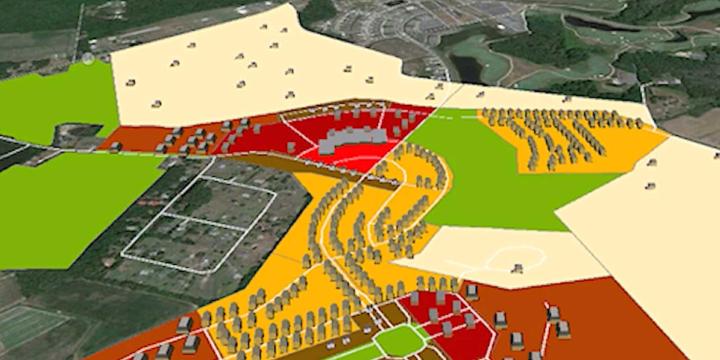
In this course you will learn practical applications for CommunityViz, one of the world's premiere GeoDesign and planning scenario tools. Planners, resource managers, local and regional governments, and others use CommunityViz to help them make decisions about development, land use, transportation, conservation and more.
Ethics: Balancing a Business Friendly Planning Environment
Over the past few decades and increasingly over the past several years, the private sector, led by developers, has increasingly courted, conflicted and collaborated with planning departments amid shrinking budgets. As business interests engage and influence public agencies and planning strategy, the role of ethics is of increasing importance for the practicing planner. This is the first of a two-part series that evaluates and analyses the role of planners, from public window staff to department heads, in an increasingly business-friendly environment.
Tactical Urbanism: An Introduction
Developed in conjunction with other movements, the Tactical Urbanism approach allows a host of local actors to test new concepts before making substantial political and financial commitments. Sometimes sanctioned, sometimes not, Tactical Urbanism features the following five characteristics: phased instigation, meeting local planning challenges, realistic and short term, low risk-high gain, and stakeholder capacity building.
Planning Ethics
The work of planning for communities is rooted in values, often unexpressed, about the role of government in working for a better future. This course reviews the expectations expressed in the AICP Code of Ethics and Professional Conduct and then explores the application of the code in a number of planning ethics case studies. This conversation about building and sustaining an ethical planning organization sets out to define what makes an ethical planning organization and describes steps that planners can take to improve the ethical climate of their organizations.