

Bicycle Planning Courses




- CIP
- AIA CES
- AICP CM
- SACPLAN CPD



Top Bicycle Planning Instructors









Master Urban Planning Skills With A Planetizen Courses Subscription.
Sign up
High quality video lessons developed by experts.

Complete course work to receive a certificate from Planetizen.

Test your comprehension with course quizzes.

Access reading lists, articles, and other materials prepared by instructors.
All Bicycle Planning Courses
US Disability Access Laws for Planners
Explore the key disability rights laws that shape planners' work — including the Americans with Disabilities Act, the Architectural Barriers Act, the Fair Housing Act and the Rehabilitation Act of 1973 — to understand their core provisions.


Digital Accessibility for Planners – Web
Explore techniques to make their web content created by planners accessible to people with disabilities and compliant with regulations and laws that support disability access. Examples include social media, public outreach and input mechanisms and agency and plan websites.
Digital Accessibility for Planners: Documents – Part 2
Part two of this course series demonstrates more advanced techniques planners can use to ensure their documents are accessible.
Digital Accessibility for Planners: Documents - Part 1
By the end of this course, planners will be able to address common access barriers in documents they produce. The first course will provide an introduction to the topic and initial skills, while the second course will dive into more "advanced" skills.
Enhancing Public Participation with Generative AI
This tutorial shows how generative AI can enhance inclusive and responsive public participation in urban planning by summarizing feedback, tailoring outreach, and visualizing scenarios using real-world tools and examples.
Generative AI Tools and Workflows for Urban Planning
This course introduces planners to the fundamentals of Generative AI (GenAI) and its practical uses in creating text, images, videos, and designs. It highlights how these tools can enhance and streamline urban planning practice.
Walkable City 1: Why Walkability?
Jeff Speck explains his five principal reasons for building more walkable places — Economics, the Environment, Public Health, Equity, and Social Cohesiveness — arming practitioners with a full range of arguments in favor of pro-walkability planning.
Designing the Built Environment for People With Autism Spectrum Disorder
This course covers how autistic people experience urban and natural environments and the design techniques used to improve their experience.
Introduction to GIS, Part 2
Take the next step into the world of Geographic Information Systems (GIS) and ArcGIS Pro with an overview of navigation, map projections, and essential map design principles.
Green Infrastructure
This course defines green infrastructure, highlights its types and benefits, discusses monetary valuation and financing, and explores its role in addressing climate change, equity, and technological change.
Demystifying AI: Terminology, Tools, and Techniques for Urban Planners
Understanding the basics of artificial intelligence, or AI, is increasingly important for urban planners. Learn the capabilities, limitations, and language of emerging technologies that utilize AI methods.
History of U.S. Landscape Architecture, Part 1
Kristin Faurest explores the history of the profession of landscape architecture from its origins through the 1960s, providing a vibrant global context of how humankind has shaped its landscape over the ages.
Building Bad, Part 2: How Architectural Utility is Damaged by Expression
Join Jonathan Ochshorn on a captivating exploration of his theory "Building Bad" in Part Two of this course. Discover the fascinating interplay between artistic expression and the functionality of buildings, and how they can sometimes clash.
Building Bad, Part 1: How Architectural Utility is Constrained by Politics
Discover the theory of “Building Bad”: an examination of the costs and benefits that can limit the functionality of buildings in exchange for profits.
Interpreting Places and Spaces
Interpretive media can dramatically enhance people's experience of place. Learn how to develop and execute a plan that brings the stories tied to places to life.
Designing a Wayfinding System
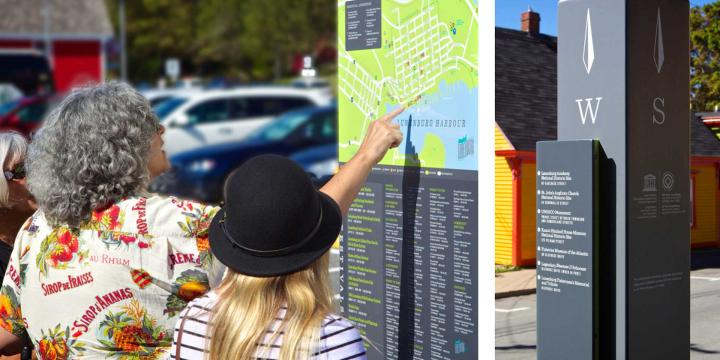
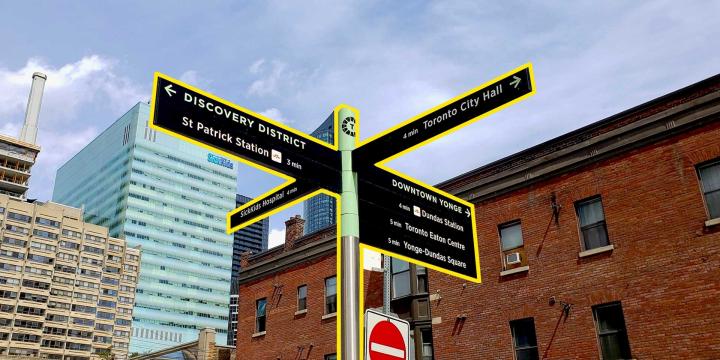
Learn how to create a comprehensive wayfinding signage system for your municipality from start to finish.
Planning a Municipal Wayfinding System
Often overlooked, wayfinding is important for urban design, accessibility, and economic development. Learn the elements of a successful wayfinding system in this course.
Introduction to Transit Oriented Development
Few terms are as common in the discussion of city and regional planning in the 21st century as transit oriented development (TOD)—the planning and designing of high-demand land uses at or near highly efficient modes of transportation.
Right-Sizing Zoning for Better Outcomes
Using elements of the built environment that contribute to a community’s unique sense of place and examples from across the United States, this course explores how to realign zoning with the goals and policies adopted in community plans.
Women and Cities 5: The Feminist Future City
This final chapter speculates on what a feminist city could look like, recalling case studies and ancient examples that include contemporary contexts but also consider future needs for a more heart-centered city designed for everyone.