

Bicycle Planning Courses



- CIP
- AIA CES
- AICP CM
- SACPLAN CPD








Top Bicycle Planning Instructors









Master Urban Planning Skills With A Planetizen Courses Subscription.
Sign up
High quality video lessons developed by experts.

Complete course work to receive a certificate from Planetizen.

Test your comprehension with course quizzes.

Access reading lists, articles, and other materials prepared by instructors.
All Bicycle Planning Courses
US Disability Access Laws for Planners
Explore the key disability rights laws that shape planners' work — including the Americans with Disabilities Act, the Architectural Barriers Act, the Fair Housing Act and the Rehabilitation Act of 1973 — to understand their core provisions.


Digital Accessibility for Planners – Web
Explore techniques to make their web content created by planners accessible to people with disabilities and compliant with regulations and laws that support disability access. Examples include social media, public outreach and input mechanisms and agency and plan websites.
Digital Accessibility for Planners: Documents – Part 2
Part two of this course series demonstrates more advanced techniques planners can use to ensure their documents are accessible.
Digital Accessibility for Planners: Documents - Part 1
By the end of this course, planners will be able to address common access barriers in documents they produce. The first course will provide an introduction to the topic and initial skills, while the second course will dive into more "advanced" skills.
Enhancing Public Participation with Generative AI
This tutorial shows how generative AI can enhance inclusive and responsive public participation in urban planning by summarizing feedback, tailoring outreach, and visualizing scenarios using real-world tools and examples.
Reinventing Malls: Planning Alchemy—Turning Gray Fields Into Gold
Explore the need and opportunity to reinvent aging mall sites into vibrant, inclusive, and economically valuable centers for 21st-century communities.
Walkable City 1: Why Walkability?
Jeff Speck explains his five principal reasons for building more walkable places — Economics, the Environment, Public Health, Equity, and Social Cohesiveness — arming practitioners with a full range of arguments in favor of pro-walkability planning.
The Good Street: A New Methodology for Balancing Place and Flow
International urban design consultant Lennart Nout explains the Dutch method for balancing conflicts between urban vibrancy and traffic flow and between different modes of transportation.
Principles of Intersection Design
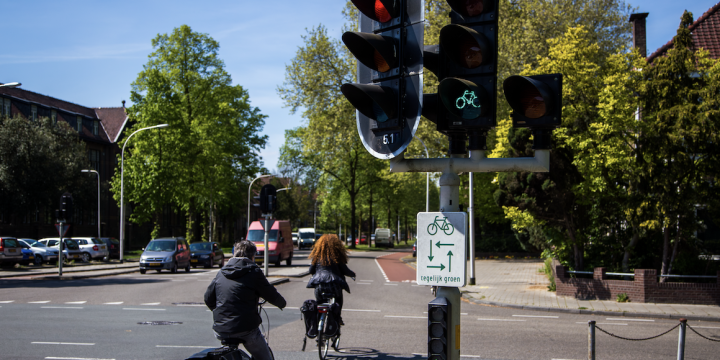
Lennart Nout and Nick Falbo explain how Dutch traffic engineers make decisions around intersection design and dissect the crown jewel of Dutch bike infrastructure: the protected bike lane intersection.
Good Speed by Design: A Network Approach to Traffic Calming
Lennart Nout explains how to slow down car traffic with a comprehensive, network-level approach that goes far beyond just speed bumps.
Introduction to Dutch Network Planning
An overview of how the Netherlands became the safest country in the world for cycling, and how other countries can replicate their success by thinking about cycling infrastructure on a network level.
Designing the Built Environment for People With Autism Spectrum Disorder
This course covers how autistic people experience urban and natural environments and the design techniques used to improve their experience.
Designing a Wayfinding System
Learn how to create a comprehensive wayfinding signage system for your municipality from start to finish.
Planning a Municipal Wayfinding System
Often overlooked, wayfinding is important for urban design, accessibility, and economic development. Learn the elements of a successful wayfinding system in this course.
Just Suburbs: The New Frontier for Equity and Inclusion
Poverty is being displaced from central cities to suburbs. As a response, planners should look to strategies that create mixed-income neighborhoods—a place that everyone can call home.
Suburban Remix: Creating the Next Generation of Urban Places
The economic, demographic, and technological forces reshaping suburbs are under-reported and misunderstood. Learn how suburbs can manage change while enhancing livability, economic opportunity, and fiscal responsibility.
A New Era of Downtown Opportunity: The Intersection of Housing and Innovation
Learn specific policy and urban design strategies for adapting downtowns to a new role: innovation communities.
How Zoning Shapes Cities, Communities, and Regions
A better understanding of the basic components of zoning, history and evolution of zoning codes, economic and political goals of plan implementation, and impacts on housing prices and production can inform improved planning outcomes.
Equitable Transit Oriented Development
Equitable transit oriented development (eTOD) prioritizes inclusive community development in multi-modal regional growth.
Introduction to Transit Oriented Development
Few terms are as common in the discussion of city and regional planning in the 21st century as transit oriented development (TOD)—the planning and designing of high-demand land uses at or near highly efficient modes of transportation.