

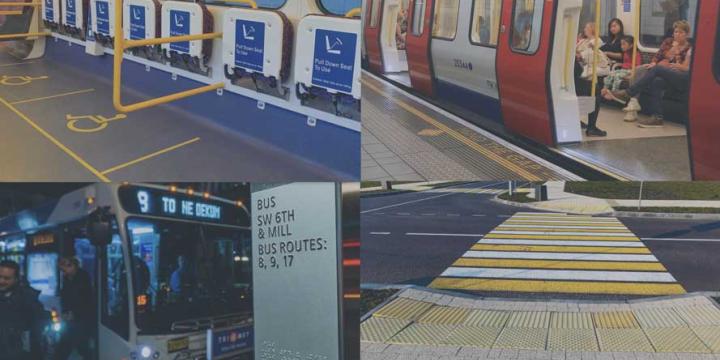
Accessibility refers to the ability of people of all ages and abilities to comfortably navigate public and private spaces. Formalized by the federal government as the Americans with Disabilities Act (ADA), accessibility principles underpin regulations that call for accessible elements such as wheelchair ramps, curb cuts, buttons, and more. Accessibility planning centers the experience of people with disabilities in designing public spaces, buildings, and transit facilities.
Accessibility Courses

54 Mins
- CIP
- AICP CM

102 Mins
- AIA CES
- AICP CM

78 Mins
- AIA CES
- AICP CM

84 Mins
- CIP
- AIA CES
- AICP CM

54 Mins
- CIP
- AIA CES
- AICP CM

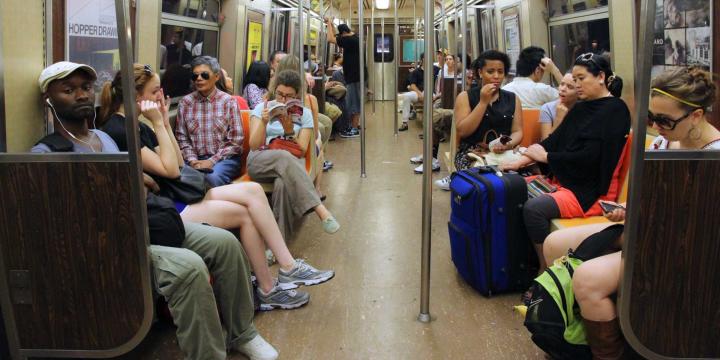
55 Mins
- CIP
- AIA CES
- AICP CM
- SACPLAN CPD
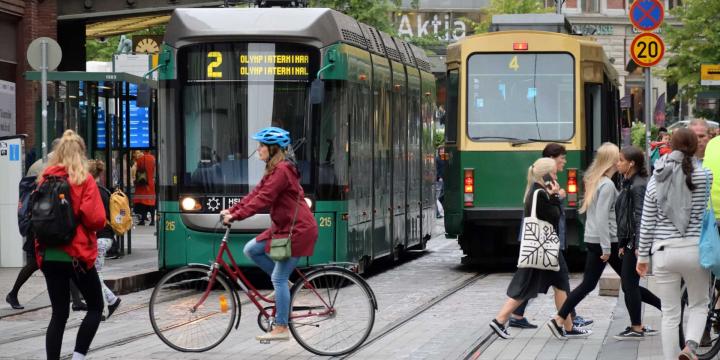
59 Mins
- CIP
- AIA CES
- AICP CM
- SACPLAN CPD


Top Accessibility Instructors

Thomas Hamed
Thomas Hamed, AICP is a transportation planner who specializes in commuter transportation and mobility for all...

Jonathan Katz-Ouziel
Jonathan Katz-Ouziel is an autistic planner, an independent accessibility consultant, and the founder of Opossum House...

Adam Fine
Adam is the Director of experiential graphic design at Nova Scotia-based Fathom Studio and has worked...

Katrina Johnston-Zimmerman
Katrina is a lecturer, researcher, and advocate for heart-centered cities. Her work focuses on human behavior...

Tom Sanchez
Tom Sanchez is a professor of Urban Planning specializing in Artificial Intelligence, Technology, and Landscape Architecture.

Kristin Faurest
Kristin Faurest is a public garden education and outreach professional, author, and landscape architecture educator, committed...

John Hersey
John is a planner with two decades of experience critically evaluating and advancing transit-oriented development as...
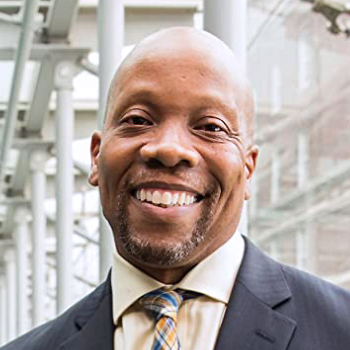
Lance Freeman
Lance Freeman is a Professor in the Urban Planning Program at Columbia University in New York...
Master Urban Planning Skills With A Planetizen Courses Subscription.
Sign up
High quality video lessons developed by experts.

Complete course work to receive a certificate from Planetizen.

Test your comprehension with course quizzes.

Access reading lists, articles, and other materials prepared by instructors.
All Accessibility Courses
Walkable City 1: Why Walkability?
Instructor: Jeff Speck
Jeff Speck explains his five principal reasons for building more walkable places — Economics, the Environment, Public Health, Equity, and Social Cohesiveness — arming practitioners with a full range of arguments in favor of pro-walkability planning.

