

Bicycle Planning Courses







- CIP
- AIA CES
- AICP CM
- SACPLAN CPD





Top Bicycle Planning Instructors









Master Urban Planning Skills With A Planetizen Courses Subscription.
Sign up
High quality video lessons developed by experts.

Complete course work to receive a certificate from Planetizen.

Test your comprehension with course quizzes.

Access reading lists, articles, and other materials prepared by instructors.
All Bicycle Planning Courses
Bicycle-Friendly Streets: Design Standards
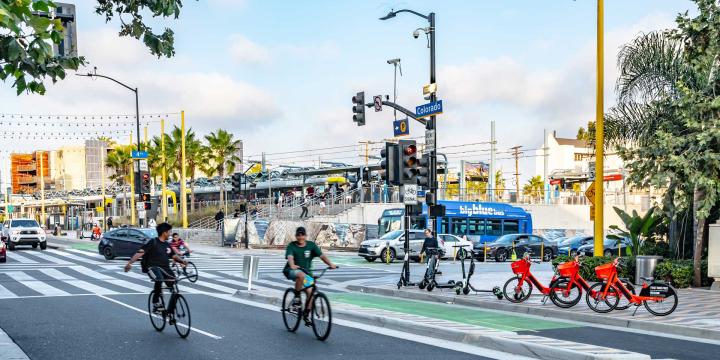
"Bike Friendly Streets: Design Standards" presents examples of cities across the United States and globally redesigning their streets to accommodate and encourage bicycling. From road diets that make room for bike lanes to complete redesigns of streets, cities are stepping up to the challenge of providing a variety of options for the bicyclists in their communities.


Drawing in the Landscape: The Adventure Begins
This is the first course in the Drawing series. In this course, you will learn techniques for drawing, sketching and rendering in the field. You will learn how to draw lines and contours, understand perspective, and render tone and value with light and shadow.
Design in Planning: An Overview
In this course, Planetizen brings you an overview of design in planning. Using real world examples from design guidelines, plans, and manuals, city planner Jason Kambitsis looks at how code, practice and guidelines precipitate design and the form of our cities.
Legal Issues for Form-Based Codes
Form-based codes (FBCs) have made a big splash in re-zoning, general plan updates and among land use professionals and stakeholders. Learn what form-based codes are from a legal definition, and the authority for form-based codes. Instructor Mark White evaluates the nuances of due process issues, takings, suburban uses of FBCs and exclusionary zoning.
Drawing in the Landscape: Pen, Pencil and Watercolor
This is the second course in the Drawing series. This course focuses on the benefits of other mediums, using pencil, pen, watercolor to draw an assortment of common built environment features: plants, people, architecture as well as exploring panoramic vistas.
Tactical Urbanism: An Introduction
Developed in conjunction with other movements, the Tactical Urbanism approach allows a host of local actors to test new concepts before making substantial political and financial commitments. Sometimes sanctioned, sometimes not, Tactical Urbanism features the following five characteristics: phased instigation, meeting local planning challenges, realistic and short term, low risk-high gain, and stakeholder capacity building.
Regional Scenario Planning: An Overview
This first of two courses offers a brief history of regional scenario planning in the late 20th century and beyond, with examples from Portland, Oregon's Vision 2040, Salt Lake City's Envision Utah, and the Chicago Metropolis Plan. Principles of regional planning relating to land use, urban design, and transportation are discussed. Finally, more advanced regional planning topics are touched on, including jobs/housing balance, and the relationship between demographics and regional housing market demand.