

Site Analysis Courses
- CIP
- AIA CES
- AICP CM
Top Site Analysis Instructors




Master Urban Planning Skills With A Planetizen Courses Subscription.
Sign up
High quality video lessons developed by experts.

Complete course work to receive a certificate from Planetizen.

Test your comprehension with course quizzes.

Access reading lists, articles, and other materials prepared by instructors.
All Site Analysis Courses
Urban Design for Planners 1: Software Tools
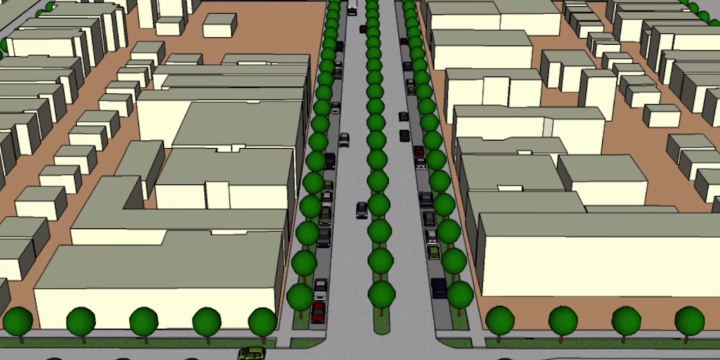
Urban planners and urban designers are interested in building places that embody beauty and hope. In this course, Emily Talen, PhD, FAICP, presents free urban design software tools that can help urban planners and urban designers visualize changes in the built environment to support the overarching goal of creating better places.


Regulatory Implications of Tiny Homes
In this course we will define a tiny home and explore the history and appeal of this seemingly recent movement. The course touches on challenges associated with the legal development and regulation of this alternative residential option.
Introduction to New Mobility
The course on "New Mobility" covers the gamut of technological advancements where planning, transportation, and infrastructure design intersect.
Transit Planning: The First/Last Mile
This course covers the range of elements needed to boost access to transit, with a focus on door-to-door transportation from a destination to a transit station.
Understanding the Great Recession
This course explores the causes of the Great Recession, the recession's impact on local policy discussions, and how planners should think about economic impacts when thinking about long-term plans.
The American City, Part 4: Complexity and Pattern in the City
Understand how sustainable urbanism can be a crucial component of the urban pattern, or otherwise subverted by government regulations and business models.
Missing Middle Housing: Meeting the Growing Demand for Walkable Urbanism
Learn about Missing Middle Housing and how to integrate these types into existing neighborhoods.
The American City, Part 3: Learning from the Grid
This course demonstrates the well-defined formal composition and spatial processes of how American cities evolve over time.
The American City, Part 2: The Invention of a New Scale
Understand how the physical characteristics of block size and street length distinguish American cities from earlier models of urbanism, and the implications of these physical characteristics for sustainability in the 21st century.
Legal Issues in Sign Codes
This course provides basic knowledge of the legal issues involved in sign codes, focusing on constitutionally-compliant sign codes in the aftermath of U.S. Supreme Court's recent decision in Reed v Town of Gilbert
The American City, Part 1: A Brief History of the Regular Grid
Learn why the regular grid has been a standard part of the town planning vocabulary around the world for nearly five millennia.
Economic Impact Analysis in Land Use Planning
This course examines how input-output models contribute to economic impact analyses and presents examples of how economic impact analysis can be applied in a wide range of planning projects.
Creating a Low-Carbon, Resilient City
This course introduces strategies for achieving low-carbon, resilient communities.
Understanding Fiscal Impact Analyses
This course will explore the various elements of a fiscal impact analysis, particularly as it relates to residential projects.
Greenhouse Gas Emissions Accounting for Cities
Greenhouse gas emissions accounting is a core tool for developing, implementing, and monitoring climate actions and strategies. This course provides a basic overview of concepts that can be supplemented with training in specific software.
Calculating the Benefits of Parks, Trails, and Open Space
This course provides examples of how to calculate market and non-market values of parks, trails, and open space, as well as how to identify potential revenue-generating opportunities for long-term maintenance and operation.
Urban Sustainability Appraisal Tools for Planned Neighborhoods and Landscapes
This course is the third in a four-part series on urban sustainability appraisal tools as collaboration platforms and sustainability accelerators for communities.
Urban Sustainability Appraisal Tools for Communities and Existing Neighborhoods
This course is the second in a four-part series on how urban sustainability appraisal tools can serve as collaboration platforms and sustainability accelerators for communities.
Comprehensive Planning for Healthy Communities
This course covers the process of incorporating public health goals into a General Plan or Comprehensive Plan for a region, county, city, town, or neighborhood.
Introduction to Healthy Communities
This course provides an overview of the healthy community movement and the relationship between health and planning.