pedestrians and bicyclist in helsinki

Women and Cities 5: The Feminist Future City

This final chapter speculates on what a feminist city could look like, recalling case studies and ancient examples that include contemporary contexts but also consider future needs for a more heart-centered city designed for everyone.

  • Preview Course PREVIEW

Course Info

  • Duration 6 video lessons (59 Mins)
  • Published Published
    2022
Play Video

Preview Course Preview Course

Browse Course Chapters

  • Chapter Locked
    1.
    Introduction
    Chapter Duration 2 mins
  • Chapter Locked
    2.
    What Would a Feminist City Look Like?
    Chapter Duration 17 mins
  • Chapter Locked
    3.
    The Feminist City as Co-Created
    Chapter Duration 8 mins
  • Chapter Locked
    4.
    The Feminist City as Communal
    Chapter Duration 12 mins
  • Chapter Locked
    5.
    The Feminist City as Compassionate
    Chapter Duration 15 mins
  • Chapter Locked
    6.
    Conclusion
    Chapter Duration 2 mins

What You Will Learn

  • Understand gender bias in urban environments.
  • Understand the role that gender has played in constructing cities and systems throughout history.
  • Learn about contemporary examples of women impacting cities globally in different contexts. 
  • Learn about alternative feminist approaches to urban design, architecture, transportation, policy, and urban planning.
  • Gain the ability to critically assess urban development from a gender-equitable lens.
  • Furthering the conversation around gender equitable cities.

Course Description

This course will cover what a feminist future city could look like based on case studies and the ancient examples provided in previous courses from the "Women and Cities" series. This final courses in the series considers the contemporary context but also anticipates future needs to envision a more heart-centered city that works for everyone. 

Learn these skills

  • Accessibility
  • Civic Engagement
  • Demographics
  • Development
  • Environmental Planning
  • Equity
  • Housing
  • Land Use
  • Pedestrian Planning
  • Public Health
  • Transportation
  • Urban Design
  • Urbanism
  • Walkability

AICP CM

This course is approved for 1 AICP CM credit.

AIA CES

This course is 1 LU.

SACPLAN CPD

This course is approved for 1 SACPLAN CPD point.

CIP

This course is eligible for self-reported CIP unstructured CPL units.
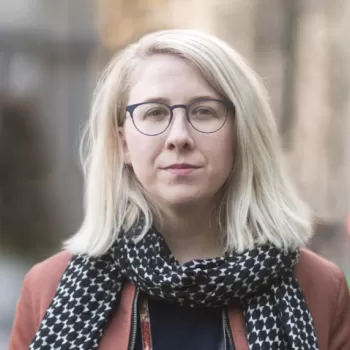
Meet Your Instructor

Katrina Johnston-Zimmerman

Katrina Johnston-Zimmerman

Katrina is a lecturer, researcher, and advocate for heart-centered cities. Her work focuses on human behavior in public space and the relationship between behavior and design.

Meet Instructor

Course Reviews

4.47
Lee-Anne Dreyer

Lee-Anne Dreyer

Extremely Satisfied
Jeffrey Montague

Jeffrey Montague

Satisfied
Emily Pierson-Brown

Emily Pierson-Brown

Satisfied
Liz Axelson AICP CPL

Liz Axelson AICP CPL

Extremely Satisfied
Katrina Johnston-Zimmerman, an urban anthropologist, and sincere and insightful speaker, inspires us in this final part of the overall course about gender equity pointing to the changes that have resulted from people banding together, protesting resulting in co-created, communal and compassionate changes to public spaces in cities. Although this series originally focused on improvements based on the needs of women, they can make a better public life for children, especially girls and ultimately enhance social interactions and public places for everyone. She provides thought-provoking points about how of many spaces originally built for other purposes can be transformed into places for people of all genders and ages for practical, social, leisure and community purposes.

Course Reviews

58%
32%
10%
0%
0%
Lee-Anne Dreyer

Lee-Anne Dreyer

Extremely Satisfied
Jeffrey Montague

Jeffrey Montague

Satisfied
Emily Pierson-Brown

Emily Pierson-Brown

Satisfied
Liz Axelson AICP CPL

Liz Axelson AICP CPL

Extremely Satisfied
Katrina Johnston-Zimmerman, an urban anthropologist, and sincere and insightful speaker, inspires us in this final part of the overall course about gender equity pointing to the changes that have resulted from people banding together, protesting resulting in co-created, communal and compassionate changes to public spaces in cities. Although this series originally focused on improvements based on the needs of women, they can make a better public life for children, especially girls and ultimately enhance social interactions and public places for everyone. She provides thought-provoking points about how of many spaces originally built for other purposes can be transformed into places for people of all genders and ages for practical, social, leisure and community purposes.
fulvio testaverde 1

fulvio testaverde 1

Extremely Satisfied
Sam Harris

Sam Harris

Extremely Satisfied
Carli Meyer

Carli Meyer

Normal
steve abraham

steve abraham

Normal

Master Urban Planning Skills With A Planetizen Courses Subscription.

Sign up
Computer

High quality video lessons developed by experts.

Analytics

Complete course work to receive a certificate from Planetizen.

Certificate

Test your comprehension with course quizzes.

Cloud

Access reading lists, articles, and other materials prepared by instructors.