aerial of freeways connecting

Economic Thinking for Planners: Overview

This course shows how "Economic Thinking" can inform our thinking on big questions like why some countries are rich while some are poor and how so many us have become so much better off than our ancestors.

  • Preview Course PREVIEW

Course Info

  • Duration 8 video lessons (56 Mins)
  • Published Published
    2015
Play Video

Preview Course Preview Course

Browse Course Chapters

  • Chapter Locked
    1.
    Introduction
    Chapter Duration 4 mins
  • Chapter Locked
    2.
    Why This Course?
    Chapter Duration 8 mins
  • Chapter Locked
    3.
    Institutions, Prosperity, and Property Rights
    Chapter Duration 6 mins
  • Chapter Locked
    4.
    Virtuous Cycle
    Chapter Duration 2 mins
  • Chapter Locked
    5.
    Ten Pillars of Economic Thinking
    Chapter Duration 4 mins
  • Chapter Locked
    6.
    Two Corollary Pillars
    Chapter Duration 8 mins
  • Chapter Locked
    7.
    A Few Trade-offs for Planners
    Chapter Duration 14 mins
  • Chapter Locked
    8.
    Summing Up
    Chapter Duration 6 mins

Course Description

The oldest question in economics asks why some countries are rich and some are poor. A related question: how have most of us have become so much better off than our ancestors? These questions, and others like it, get at the issue of how and why cities matter. The interest of this course relates to what we will call "Economic Thinking" and how it informs our thinking about these big questions.

Learn these skills

  • Economics
  • Law and Policy

AICP CM

This course is approved for 1 AICP CM credit.

SACPLAN CPD

This course is approved for 1 SACPLAN CPD point. 
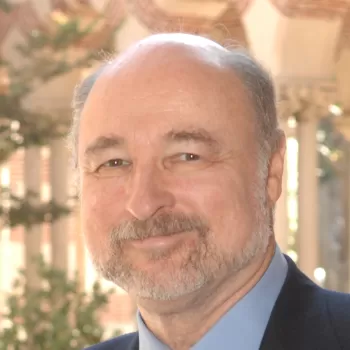
Meet Your Instructor

Peter Gordon

Peter Gordon

Peter Gordon is Professor Emeritus at the University of Southern California Price School of Public Policy. His research interests are in applied urban economics.

Meet Instructor

Course Reviews

4.10
Dylan Huber-Heidorn

Dylan Huber-Heidorn

Dissatisfied
In general, I think this course (and the rest of the series) doesn't do a great job of answering its central question about why some places are rich and some are poor. There's no serious grappling with alternative ideas, which leaves it feeling like an uncritical piece of work, although there are interesting insights scattered throughout. I came prepared to be convinced of something, or at least challenged by well-supported argument, and instead I just felt like I was sitting through a pretty standard economics lecture that views a lot of its conclusions as self-evident (again, despite those conclusions supposedly being key to the central question).
Robin Large 1

Robin Large 1

Extremely Satisfied
Alan Booker

Alan Booker

Extremely Satisfied
Jon Hilliard 1

Jon Hilliard 1

Extremely Satisfied

Course Reviews

35%
43%
17%
3%
0%
Stepan Glushkov

Stepan Glushkov

Satisfied
Dan Lawlor

Dan Lawlor

Extremely Satisfied
Leah Emerson

Leah Emerson

Satisfied
Practical examples help underscore the concepts in this course.
Andrew Gray

Andrew Gray

Satisfied
Melissa Edwina Buys

Melissa Edwina Buys

Extremely Satisfied
Elegawa

Elegawa

Satisfied
Natalie Engel

Natalie Engel

Extremely Satisfied
SumnerPlanner

SumnerPlanner

Extremely Satisfied

Master Urban Planning Skills With A Planetizen Courses Subscription.

Sign up
Computer

High quality video lessons developed by experts.

Analytics

Complete course work to receive a certificate from Planetizen.

Certificate

Test your comprehension with course quizzes.

Cloud

Access reading lists, articles, and other materials prepared by instructors.